
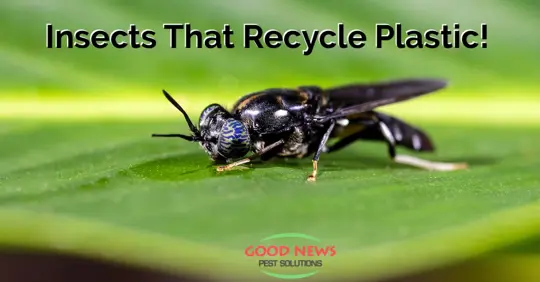
We’ve done a lot of posts over the years about various insects, many of which we don’t want in our homes but still have a purpose and play an essential role in our ecosystem. Today’s topic may be the strangest blessing we’ve found in all of God’s creation: fly larvae that seem tailor-made for our current global crisis.
For years, we’ve known that black soldier fly larvae were fantastic natural composters, turning food scraps into feed and plant fertilizer. But a new study claims these recyclers could have an even bigger impact on our landfills and recycling efforts. Turns out, black soldier flies can survive and even thrive, eating and breaking down plastics.
Plastic Problem
Despite the proliferation of blue bins and PSAs in the last few decades, only about 9% of plastics are actually recycled. When it was last analyzed back in 2018, it was estimated that 4.9 to 6.3 billion metric tons of plastic sits in landfills in the United States. It’s projected that by 2050, that could reach 12 billion metric tons of non-recycled plastic. And most of that plastic will linger forever, or at least well past our lifetimes.
Biodegradable plastics are the exception as they are made from corn starch, sugarcane, and potato starch. They are increasingly used for food packaging. However, many of these plant-based plastics only break down when industrially composted, which most U.S. landfills aren’t set up for. And despite the growth of biodegradable plastics, they still only make up less than one percent of the market.
Black Soldier Fly Larvae
There are a few insects that can break down plastics: larvae of waxworms and mealworms are the most prevalent. But as reported in a study published in Environmental Entomology, black soldier flies gobble down polyurethane foam at a steady rate, going from tiny nymphs to plump, inch-long larval worms.
During their 10-50-day larval period, Hermetia illucens eat constantly and can grow up to three times their initial body weight. Entomologists already pioneered using black soldier fly larvae to recycle and compost food waste. The compost is used as fertilizer and the larvae are fed to livestock. Doing so saves hundreds on expenses of discarding food and feeding cattle, fish, and poultry. Reptile owners also purchase the larvae to feed their pets.
The findings of Henan University of Technology suggest the gut microbes of black soldier fly larvae could help break down stubborn plastic waste. Not only did the larvae survive on plastics, their frass, or feces, showed the chemical bonds that form plastic had been broken down.
Fully Biodegradable
But black soldier flies could have an even larger impact on our plastics use. A research team at Texas A&M has been studying how to make degradable bioplastics from black soldier flies. Normally, after the fly larvae feed, they enter a two-week pupal stage, then emerge as adults who live for eight days, mating, laying eggs, and then dying. The adult flies themselves are worthless to farmers, so they had been largely ignored.
But if the scientists are right, the flies’ outer exoskeleton, or chitin, can be repurposed to make truly biodegradable plastics. And the leftovers? Those can be fed to the hatching larvae to break down and become cattle feed or biodegradable plastic again.
Southern Cross University in Australia is conducting a similar study with comparable results. Researchers there point out that the use of insect-based bio-friendly plastics could also significantly cut down on the microplastics found everywhere, including in our own bloodstream. The SCU study is looking specifically at creating bandages and wound coverings with their new plastics.
Between the two universities, there is potential to use insect-generated biodegradable plastics to create packaging and food wraps, medical dressings, and biodegradable hydrogel balls that help stop flooding in agricultural areas. They’re even looking into spinning chitin fibers to make paper!
The only problem now is how to scale production and market the new plastic.
Green Guarantee
Black soldier flies aren’t a concern for homeowners on the Gulf Coast of Florida, but we have plenty of other insect pests to deal with. Thankfully, our Go Green Perimeter Plus service handles most of the typical bugs we see in the Sunshine State: roaches, ants, spiders, silverfish, and more. For more details, or to schedule your first appointment, please give us a call!