
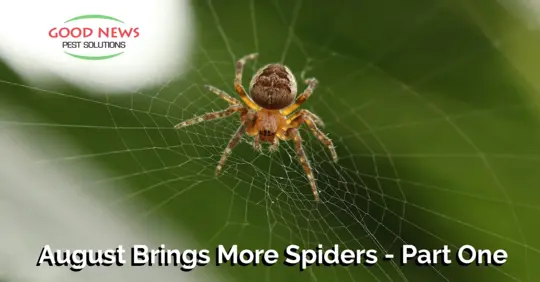
Looking at the Internet this week, people just can’t stop talking about spiders… Wait. Oh. Not spiders. Spider-Man. Everyone’s talking about Spider-Man shattering box office records last weekend. Fair enough, but spiders are definitely on our minds too. Especially here on the Gulf Coast of Florida as high humidity is bringing more of the traditional web crawlers out into the open.
Hot and Damp
While a lot of the west coast is now experiencing higher than usual humidity, for us in Florida it's a way of life. August is typically the muggiest month every year with moisture in the air measuring roughly 100% most of the time, except perhaps when it coalesces for our daily afternoon rain showers.
Spiders, especially certain species of arachnids like the more than 250 species in the Sunshine State, thrive on 70-degree temperatures and high humidity. It’s almost as if Florida was created for them. Of course, we’ve been hitting the 80’s or better during August, so those spiders tend to seek slightly cooler climes – in our homes.
Circle of Life
Two additional factors aid in the increased numbers of spiders this time of year: hatching and mating. Now technically, spider eggs hatch in the spring, but then the arachnids start to grow. Spiderlings molt 5 to 10 times in a few months. And suddenly the barely visible micro spider that hatched in April is getting to be full-sized in August.
Food sources are also more readily available during the summer months. Most spiders eat mosquitoes, roaches, ants, flies, silverfish and other insect pests. Spiders are natural pest control experts.
Spiders are also more visible because August is prime mating time for most spider species. They don’t want to be pregnant during the summer either. Especially if they’re carrying around 100 to 1000 eggs in their egg sacs. Incidentally, most male spiders die shortly after mating.
Friendly Neighborhood Spiders
It would be really great if more people were talking about and accepting of spiders. There are hundreds of species, most of which aren’t harmful to humans, and even the ones that are rarely bite. Spider silk and venom are both studied by industrialists to develop better products for humans. And some spiders will serenade us, crafting their webs to make music.
Sadly, the fear of spiders may be genetically coded into most humans. There’s just something about their look and feel that creeps us out. Not to mention the eerie feeling of unseen silk on your face or arms if you wander into a spider web in the wild. Halloween traditions probably don’t help either. Watch this space next week when we’ll take a deeper dive into the handful of potentially harmful spiders (and one other arachnid) you might encounter in Florida.
Staying Spider Free
Spiders seek out cooler areas with an abundance of food. Not our food, mind you; what they like to eat – insects and other spiders. Eliminating clutter along with regularly vacuuming and dusting can help prevent spiders from taking up residence in your home. It’s also a good idea to do a little late spring cleaning, clearing out closets, attics or crawlspaces, and shaking out empty boxes. Finally, seal cracks and crevices to eliminate entry points into your home.
To clear existing spiders out, look for them in your eaves, around exterior lights, in your pool cage or garage, as well as landscaping, shrubs and mulch beds. Double check when bringing plants, laundry, or wood into the house as well.
For the other insect pests that get into your home, many of our customers swear by our Green Perimeter Plus solution. We inspect your home and recommend sealing up all the potential entry spots in your house, including a few you may not have considered, then we eliminate roaches, ants, silverfish, and even spiders. For more details, or to schedule your first appointment, please give us a call!