
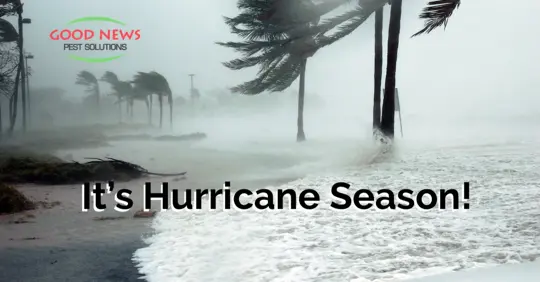
A couple of weeks ago, a new movie hit theaters titled “Pressure.” It’s all about how the Allies almost lost World War II… because of the weather. Disagreements about the means and measures of weather prediction almost sent the D-Day troops to storm the beaches of France in the midst of near-tropical storm conditions. In the 1940’s, they just didn’t have the technology to adequately predict the weather.
That all changed in the 60’s and 70’s with the advent of computers. Scientists and even laymen are now able to utilize systems that combine historic weather records and a multitude of weather-related data to more accurately predict what the forecast will be. But it’s still more of an art than a science.
Climate Predictions
Every year, the National Oceanic and Atmospheric Administration (NOAA) makes predictions about our upcoming Hurricane Season. This year’s prediction is very positive. While we can never avoid all the storms, the NOAA’s estimates give us a 35% chance of a near-normal season, a 10% chance of an above-normal season, and a 55% chance of a below-normal season.
That’s really good news for the Gulf Coast of Florida. Many are still recovering from the storms of past years. Hurricanes Ida (2021), Ian (2022), and Helene (2024) caused hundreds of fatalities and over $300 billion in combined economic devastation across the Gulf Coast and up into the rest of the United States. Homeowners affected by these storms are, in many cases, still waiting for insurance claims to be paid and to rebuild.
An average season has 14 named storms with seven hurricanes, including three major hurricanes. NOAA predicts 8-14 named storms. So far, we have had one: Tropical Storm Arthur formed off the Texas coast on June 17, 2026. It did not become a hurricane, but NOAA suggests 3-6 of those named storms will do that, with 1-3 major storms arising. They have 70% confidence in these ranges.
Colorado State University’s Tropical Meteorology Project also releases predictions each year. Their forecast coincides pretty closely with NOAA this year. CSU predicts 13 named storms, six hurricanes, and two major hurricanes. CSU also says they expect a below-average probability of major hurricane landfalls along the continental U.S. coastline.
What’s in a Name?
Tropical storms, or more specifically, tropical cyclones, went without names for eons. But as the world became closer via technology and global conflicts, proper names became essential. They might not have been able to predict storms, or fly planes into them as we do now, but the Allies began the custom of naming cyclones (hurricanes and typhoons) in order to easier classify and discuss them during World War II. Initially, all of the names were female.
At some point, we transitioned into using both masculine and feminine names, and the names are picked in a cyclical fashion, repeating every 6 years. The names we use in 2026 will be recycled in 2032, minus any names of storms that caused significant damage. There will be no more Charleys, Katrinas or Andrews. The replacement names for these devastating storms are selected by the United Nations World Meteorological Organization.
Batten Down the Hatches
If you’ve lived on the Gulf Coast of Florida for any length of time, you probably already know some of the preparations that need to be made. Still, we get complacent, and people rush to stores every time a new storm threatens, because they’re not adequately prepared. After the past few years of very active hurricane seasons, we hope this is more of a reminder than a last minute checklist.
You’ll want plenty of water and, if possible, a generator with a safely secured gas can. Additionally, consider stocking up on an emergency food supply, an emergency medicine supply, power sources such as flashlights and extra batteries, a battery-operated radio, safety and personal items, important documents, including medical documents, wills, passports, and personal identification, all preferably secured in a sealed ziplock bag, and a fire extinguisher.
Fill your bathtub with water, to be used for bathing, as well as toilet flushing. Clear your yard of anything that could blow around during the storm and damage your home. Loose tree limbs, bicycles, lawn furniture, grills, propane tanks, firewood, and building materials should be brought inside or secured under shelter.
Use storm shutters or nail pieces of plywood to the outside window frames to protect your windows. This can help keep you safe from pieces of shattered glass. Leave one door for access, and close non-essential doors to stay safe.
Build an emergency supply kit. Gas up your car and park it in a garage or under a carport, if possible. Know where the closest emergency shelter is, and which ones take pets if you have four-legged family members. If an evacuation order is given, take it seriously.
After the Storm
Safety is your main priority. Do what you can to keep your family safe, rebuild or repair damage, and get back to “normal” life. One warning – make sure the storm is actually over before you leave the house. Too many people have lost lives and loved ones because they emerged during the eye of the storm, when everything seems calm, but didn’t get back inside before the storm came rushing back in.
One side effect of the storm you may not have thought of is the displacement of wild animals and insects. Fire ants in particular are an issue after a storm. They will often float as a nest right into your garage or porch. Bugs and rodents will seek shelter in dry areas, which includes inside your house. Do what you can at first, but if you need help, call a professional. We here at Good News Pest Solutions are always ready to help our neighbors and clients. If you need assistance, please give us a call!