
This Sunday is Mother's Day, the annual day when we pause to recognize all the moms in the world for the sacrifices they’ve made to raise us. But while we know, logically, that almost everyone has a mom, or someone who takes on that role, it may not have occurred to you that bugs have moms too. Some insect mothers are even better than their human counterparts.
Cockroaches
Okay, we’ll start it off with a bang – one of the most unexpected creepy crawlies shows signs of actually being a great mom. Cockroaches are one of the oldest creatures we know – we found evidence of them with the dinosaurs – and by all accounts they will survive longer than most other life on this planet.
The oldest cockroach-like fossil ever found was dated to 300 million years ago. Much more recently – only 125 million years ago, according to the fossil record, roaches had developed ootheca. Female cockroaches carry around these external, protein-based egg cases that you’ve probably seen around your porch. As far as we can tell, the bugs developed this protective mechanism to keep the eggs safe until they hatch.
Carrion Beetles
Around the same time as cockroaches were developing maternal instincts, another insect was exhibiting the earliest signs of active parenting on the planet. Carrion, or burying beetles feed off dead carcasses of other animals. They also mate and lay eggs within the carcass. But once the eggs hatch, both parents chew up pieces of dead things and feed them to their offspring. They also fight to protect the eggs and babies. And while both parents participate, the mothers typically do more and always fight harder against intruders.
Flower Beetles
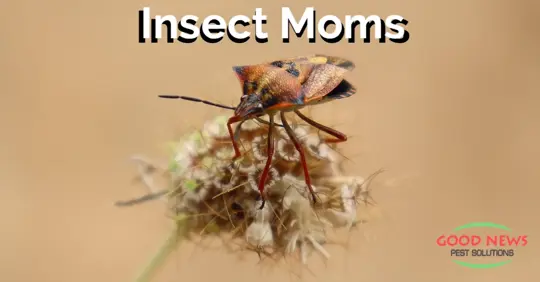
Some mother scarab beetles don’t stick around to feed their soon-to-hatch eggs or take on any parenting duties. But some do prepare for the inevitable birth. Like a mother packing lunches for her kids before they leave for school, Dicronocephalus wallichii (pictured above) will dig a nest, like the carrion beetles, then fill it with cut pieces of dead leaves for the baby to eat. Each egg gets its own nest, a time consuming prospect that has led to a slow decline of this particular scarab in North America.
Earwigs
We will start to see Earwigs soon here in the Sunshine State. They love our humid weather and will burrow into gardens and grassy areas, hoping to find small insects or rotting plant material to eat. The most popular old wives tale about earwigs is that they’ll crawl into your ear and burrow into your brain. In reality they do no such thing, but do dig around in the dirt, preparing nests for their eggs. They protect them while they gestate and even care for them after they’ve hatched, even neglecting their own food or wellbeing.
Social Insects
There are some insects that are just programmed to care for one another. While they tend to be less maternally focused – simply because the queen produces so many babies – bees, wasps, ants and termites all share in the parenting duties for the whole colony or hive. That may be as simple as preparing food, or as complicated as creating a nursery or sorting the babies into specific work classes and castes.
One interesting twist exists in the aphid wasp species Pemphredon fabricii. A few years ago, it was discovered that mama wasps of this variety will use abandoned living spaces created by fruit flies to house their young and feed them aphids. They’ll take off when the food supply is low and return with more aphids to eat, a behavior never before witnessed from wasps of any kind.
Arachnids
While arachnids aren’t technically insects, scorpions and spiders are both often lumped in with bugs in our world. There are literally more than 50,000 species of spiders on the planet, 3500 in the US and around 250 in Florida. Some of them care very carefully for their young, wrapping them in spider silk and defending them, sometimes at the cost of their own lives. In fact, most spider bites come about because the mother is defending her eggs or recent hatchlings from a perceived threat.
Some mother spiders will also carry their baby spiders on their backs. Others will haul around the egg sac before they hatch, so the future offspring can be protected. While it is unlikely you’d be harmed, the last thing you want to do is accidentally brush past a mother spider with a few dozen babies on her back. Talk about a scene from a horror movie!
Scorpions take motherhood very seriously. While we think of them as having hard exoskeletons and painful stingers, the babies have yet to develop those. So the mother scorpion will carry her little scorplings on her back for 10-20 days while they go through the first crucial stage of molting. A mother scorpion can haul up to 100 baby scorpions on her back.
Green Perimeter Plus, our most popular solution, helps with that. It eliminates spiders, silverfish, ants, cockroaches and more from your house, letting you celebrate Mother’s Day in peace. For more details, please give us a call.
And from all of us at Good News Pest Solutions, have a wonderful, happy, flower- and dinner-filled Mother’s Day!