
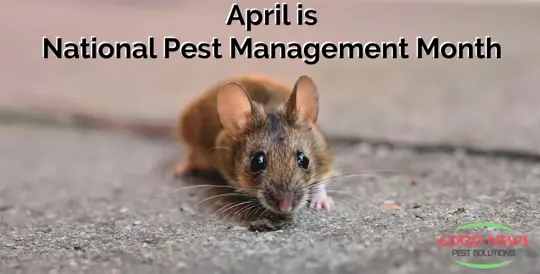
As we mentioned last week, every April is National Pest Management month. There’s a perception among the general public that Pest Management personnel only deal with insects. And while that is often the main reason we’re called to a home or business, it’s not our only area of expertise. We handle all sorts of pests. No, not your annoying cousin Louis... but several others.
Like Rodents
Unlike Tom & Jerry or the Muppet Christmas Carol led us to believe, we don’t have a lot of mice living in the walls of people’s houses. Or rats manipulating French chefs, for that matter. But we do have a lot of displaced rodents running around the Gulf Coast of Florida, especially in the last couple of decades as Sarasota, Venice, and Port Charlotte were in a near constant state of new construction. You can’t really blame rats for coming into your house when the builders kicked them out of their fields. But you still don’t want them there!
Rodents carry at least 10 different kinds of diseases including murine typhus, spirochetal jaundice, Leptospiroses, rabies, and ratbite fever. The black plague may feel centuries old, but rats still spread a form of the bubonic plague. Just a few years ago, researchers at the University of Florida discovered the rat lungworm parasite – deadly to humans – had spread to Cuban treefrogs.
Rodents also cause bacterial food poisoning and have been caught biting sleeping children who didn’t properly wash all the food particles off their hands or faces. How’s that for a bedtime story? Rats and mice can also short out electronics and even start fires gnawing on wires.
In addition to house mice, we see roof rats and Norway rats. Roof rats hang out in attics, soffits and fascia boards, palm trees, and ornamental shrubberies. They prefer a vegetarian diet but will also chew on your cable and electrical lines. Norway rats look to eat fresh (or not so fresh) meat and fish and usually can be found along the coast or near canals.
Our Premier Rodent program excludes entry points and eliminates existing populations. Then we prevent re-infestation by installing proprietary covers on your roof vents and professional-grade bait stations outside your home.
We Don’t Have a Belfry, Do We?
While there may be a home or two in our area that does boast a bell tower, no, most of our neighbors do not have a belfry. But we do have 13 species of bats that live in Florida. Some of them live in designated bat houses, but we often find them in homes, outbuildings, barns and garages.
While some folks may find bats creepy or scary, they’re actually quite helpful to us. They can eat their weight in insects every night, and one of their preferred bugs to munch on are mosquitoes. It’s less common in the United States, but in many other countries bats are pollinators for several fruit trees.
Bats are also a protected species. Much like when we use red lights on the beach to protect nesting sea turtles, there is a specified bat maternity season when no one, not even a licensed professional, can touch a bat. Bat maternity season begins today and runs until August 15.
And just for the record, we never kill bats. Anytime other than bat maternity season, we do bat exclusion, which is a fancy way of saying we carefully relocate them from your home to a more suitable habitat.
TAP-ping Out
One of our products we may not talk as much about as our insect solutions is extremely helpful when it comes to rodents, is our Thermal Acoustical Pest control or TAP.
TAP is blown-in insulation made with recycled newsprint. It is imbued with organic, biological treatment products that kill bugs that try to move through it. It’s easy to install and not nearly as dangerous as that pink fiberglass stuff. It’s fire retardant and insulates your home from sound as well as heat and cold.
The active ingredient kills bugs and deters rodents. But it’s safe for your family and pets. For more detailed information about pest control insulaion or any of our other green pest solutions, please give us a call!