
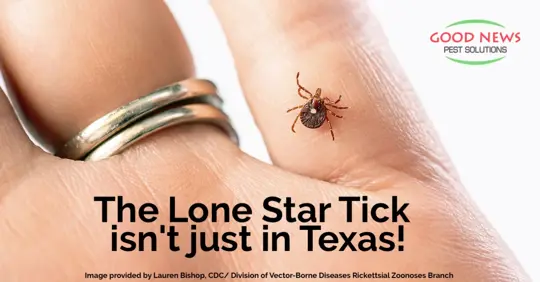
Did you know you can develop a life-threatening allergy to meat? And unlike most allergies, this one isn’t hereditary or triggered by exposure. It comes from getting bitten - by a bug, if you were wondering why we started the post this way. Specifically, by the Lone Star Tick.
Despite the name, as our headline suggests, the Lone Star Tick is not an arachnid that comes from Texas. The name is actually indicative of the tiny whitish silver “star” dot on the dorsal shield (back) of adult females. In reality, Amblyomma americanum is the most common tick in the Southeastern, Southern, Eastern, and Midwestern regions of the United States.
Identifying Them
Lone Star Ticks are reddish brown, oval-shaped, and just under a quarter of an inch long prior to feeding. Unfortunately, their bites are not painful to humans and often go unnoticed, allowing the tick to engorge themselves on our blood. When fully engorged, they can be a full half an inch big and appear slate gray. The color change comes from their outside cuticle being stretched and being able to see the waste material from processing our blood.
These ticks don’t just bite humans; they can survive on any form of mammalian blood. They actually prefer cattle and deer. They’re often found in rural areas with dense vegetation. Pets often are the source of Lone Star Ticks in the home, as well as ticks clinging to our clothes as we move through wooded areas.
Lone Star Ticks carry and can transfer ehrlichiosis, tularemia, bourbon virus, heartland virus disease, and southern tick-associated rash illness (STARI) to humans. One thing the lone star tick isn’t known for is transmitting Lyme disease. They have a much more frightening primary disease vector.
Alpha-Gal Syndrome
Imagine enjoying a wonderful ribeye at your favorite steak house. Then a few hours later, you’re hunched over with stomach pains, vomiting, diarrhea, shortness of breath, swollen lips and eyelids or full-on anaphylactic shock, and being rushed to the emergency room. The CDC reports more than 110,000 suspected cases of AGS were identified between 2010 and 2022. And they suspect there may be three times as many as yet unconfirmed.
Most mammals produce a sugar-based molecule known as alpha-gal. It does not occur in human beings. However, ticks can pick it up in their saliva when biting another animal and then transfer that into our bloodstream when they latch onto us.
Think of it like kryptonite. Pieces of Superman’s home planet cause strange reactions in his physiology. When the alpha-gal molecule enters a person’s bloodstream through a tick bite, it’s seen as a threat and attacked by our immune system, creating specific antibodies to combat it. Later, when we eat red meat, and it goes through our digestive system, the antibodies attack a known threat, making us sick.
While it’s often referred to as “red-meat allergy,” a reaction is triggered when an infected person eats pork, venison, rabbit or lamb, as well as red meat. Some people may have a reaction from consuming dairy. And unfortunately, some gelatin-based medicines, cosmetics and non-food products also carry the alpha-gal molecule.
Milder alpha-gal symptoms include hives, itching, and skin flushing. The most severe is the swelling of the nose, tongue and throat to the point you can no longer breathe without help. And a mild reaction once doesn’t mean you won’t have a more severe one later. There is no known cure.
Keeping Them at Bay
The best solution to avoid getting bitten by any tick is basically the same as our mosquito prevention. Wear long sleeves and long pants. Additionally, you’ll want to check your skin for any ticks hanging on. Most ticks quest for prey, lingering on vegetation where a mammal might pass by. Lone Star Ticks are also hunters – they can sense vibrations and carbon dioxide from the breath of their potential feeding sources.
It will also help to maintain your yard. Mow regularly, remove fallen leaves, and trim foliage so it is less conducive for ticks looking to settle. Use preventative measures on your pets that go outdoors, whether using collars or veterinarian-recommended prescription options. Essential oils, especially oil of lemon eucalyptus, can also provide some protection. Never use a dog tick collar on a cat as it can damage their nervous system. There are tick pesticides you can use, but please consult with an expert first so as not to endanger your family or pets.
Here at Good News Pest Solutions, we utilize a proprietary strategy to eliminate all adult ticks, as well as treating all known hiding places within your infested area. Because this is one of our stronger solutions, we have special requirements for the treatment process to keep your whole household safe. To have one of our highly trained technicians walk you through the entire process, please give us a call!