
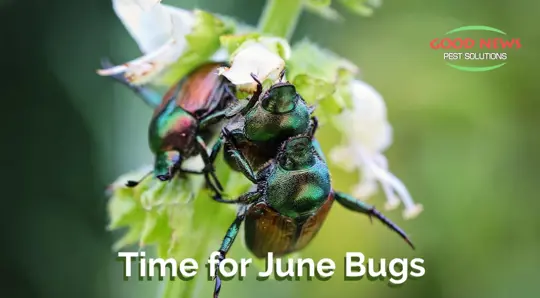
We mean, it’s right there in the name, right? You thought it’d be different on the Gulf Coast of Florida since our weather rarely goes outside of what our neighbors up North think of as summer weather? Well, you’re half-right. Here in the Sunshine State, June Bugs or June Beetles start showing up right around the same time as the rainy season starts in late May. Daily rains, mosquitoes, hurricanes, June Bugs.
And, of course, most people don't see the pretty iridescent beetles like in the picture we put at the beginning of this article. No, we most often encounter Phyllophaga spp and Cotinis nitida as dark brown dead or dying husks on our front porches and lanais. Welcome to summer.
Beetles on the Stoop
Adult June Bugs are nocturnal and naturally attracted to light, or rather lights. Your porchlight is the obvious target for most June Bugs. But if you’re paying attention, these insects will fly into your windowpanes and screen panels trying to get to the light inside. They range in size from a half inch to a full inch and tend to be brown, although some of them do boast the more colorful wings.
June Bugs have essentially two life cycles. Adult females will bury their eggs – 50 to 200 at a time – in soft soil. They hatch in three to four weeks and feed on grass, small leaves and plant roots (more on that in a moment). After hatching, grubs can live in the soil for a few months or up to three years. Strangely, these grubs tend to live upside down for much of this time, slithering around on their backs, assisted by hundreds of fine hairs.
The grubs will molt 3-4 times before emerging as adults. Up North, they winter in their third-instar grub form during the winter months, hibernating until they rise as adults in May and June, giving them their common name.
The Trouble with Offspring
Adult June Bugs are sometimes annoying and require a little extra sweeping every morning, especially if you leave your porchlight on. But for the most part, that’s the end of it. Their grubs on the other hand? That’s a different story.
While you can co-exist with June Bug grubs, more often than not they’re a bit of a nuisance, but sometimes a downright threat. White grubs, as they're called, can do significant damage to several crops – corn, potatoes, small grains, and strawberries are all at risk when June Bug larvae are around. But you don’t have to be a farmer to feel the pinch. White grubs can also destroy lawns, especially during dry days and drought periods. If you’re seeing dried brown patches in your lawn, you may have a problem.
The good news is, white grubs are great fishing bait!
June Bug is also a popular term of endearment amongst families and couples. It’s soft, cheerful, and a little quirky. It emerged as a nickname about 50 or so years ago and still persists today, especially in the South. Some people of faith also use the June Bug as an informal symbol for new beginnings, personal growth, and digging out of the darkness.
Grub n Go
The best way to prevent white grubs from damaging your lawn is to overseed. That’s a little bit of a challenge if your lawn is made up of grass plugs. You can also order beneficial nematodes and sprinkle them throughout your lawn. They are safe, organic, and eco-friendly, killing grubs without posing a threat to humans, pets, earthworms, or plants.
For adult June Bugs, install a sodium vapor light for your porch. Or you can swap out your white light bulbs for yellow or amber to cut down on June Bugs as well as other nocturnal insects drawn to the light.
While we don’t specialize in a particular treatment for June Bugs, our Green Perimeter Plus handles other beetles, spiders, ants, and roaches that may try to invade your home during the long hot summer. We make sure your screens, windows and doors are secure, along with any other potential entry points. And our treatment is safe for the whole family, even the four-legged kids. For more information, please give us a call!