
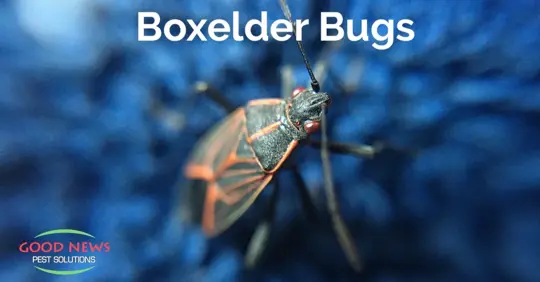
It may not feel like it but the calendar says it's mid-September, which means for our neighbors to the North, temperatures are going to start dropping. Which also means snowbird season is on the horizon. We may make jokes, but we like our seasonal guests, just maybe not the added traffic. If you’re one of those seasonal guests, or new to our area, you may better appreciate this little look at an insect we don’t have to deal with much on the Gulf Coast of Florida.
Boxelder bugs get their name from their habitat – the boxelder tree. That’s also why we don’t see too many of them in the Sunshine State. Boxelder trees are in the Maple family, a fast growing, medium sized deciduous tree usually found on wet soils. It’s a light wood tree that grows rather gnarly branches and pockets for wildlife and boxelder bugs to inhabit. The trees grow best in temperate and seasonally cold climates. We have some on the panhandle, but they are rare to find anywhere in the subtropical area we live in.
Northern Lights
Boxelder bugs, like the trees, are primarily found up North. In fact, outside of our Gulf Coast, boxelder trees can and do grow almost anywhere, and they and the bugs are both considered a nuisance. And like many insects, when the mercury goes down, the bugs come in, looking to overwinter in people’s homes.
Boxelder bugs are black with red or orange markings on the edges of their bodies and wings, although when they first hatch, they are almost entirely red. These Boisea trivittata prefer warm areas, hence the home invasion prospects. Buildings with a lot of southern or western exposure are most subject to boxelder incursions.
Northerners start noticing them in the fall as they begin clustering inside homes and offices. They are social and like to be together. Also known as stink bugs, these insects seek layered places such as shingles, newspapers, firewood and even folded fabric.
Boxelder bugs stain walls and curtains with their droppings. And they’re difficult to eliminate. In fact, once you have an infestation, the only way to rid your place of Boxelder bugs is to physically remove each and every one. But be careful! One strong squeeze and your fingers are covered in a reddish orange goo that stinks to high heaven, as our grandma used to say. If you can, scoop them up with the hose attachment to your vacuum, then ditch the bag and all in an outdoor trash can.
Golden Rain Tree Bugs
Here in Florida, we do have a bug similar to the boxelder bugs. Jadera bugs have nearly identical diets, issues, and control methods. They like to sneak into houses and will stain your clothes. What makes them different? They live in Golden Rain trees and appear as almost mirror universe reflections of the boxelder, with red bodies outlined in black edging.
Like boxelder trees, golden rain trees are invasive and can force other foliage out of their natural habitat. While they’re pretty to look at, their aggressive and intrusive nature, along with the bugs, makes them less than desirable for Florida homeowners. Removing one gets rid of the others.
For both of these insects, prevention is your best approach. Avoid pesticides. They’re only mildly effective and can do more damage to the environment and your family than to the insects. Instead, double check all the entry points, including the base of your home, where stucco can sometimes hide minor crevices.
Our Green Perimeter Plus treatment starts with an inspection where we find and recommend sealing up those very small openings the average person might miss. Then we treat with an effective, family friendly solution that eliminates ants, spiders, roaches and silverfish. Peace of mind for a very affordable price. For more details or to schedule your first visit, don’t delay, call us today!